Posts

Syed Raheel Shahzad on Africa’s Renewable Energy Leap

Trending

Syed Raheel Shahzad on Africa’s Renewable Energy Leap

Skipping the fossil-fuel grid model other economies are stuck retrofitting.

Every established economy on Earth built its electricity system around large, centralized power plants connected to consumers through an extensive, expensive transmission and distribution grid — a model that made sense when it was built, decades ago, and that those same economies are now spending enormous sums trying to retrofit toward renewable generation, often while managing an aging grid infrastructure that was never designed for the more distributed, variable nature of solar and wind power.

Much of Africa never fully built that centralized fossil-fuel grid model in the first place — and that absence, rather than being purely a historical disadvantage, has turned into a genuine structural advantage now that the cheapest and fastest-to-deploy electricity generation technology available is solar, which works exceptionally well in a distributed, off-grid or mini-grid configuration that doesn’t require the same centralized transmission infrastructure the old model depended on.

The Leapfrog Pattern, Repeating Itself

This is structurally the same pattern that played out in African telecommunications a generation earlier. Fixed-line telephone infrastructure never reached most of the continent at scale, so when mobile technology arrived, it wasn’t competing against an entrenched alternative — it simply became the default communication infrastructure directly, reaching penetration levels that fixed-line systems never approached in the decades they had to try.

Solar and mini-grid power is following an almost identical trajectory. Kenya, Rwanda, and parts of Nigeria and Tanzania have scaled off-grid and mini-grid solar to the point where, in many communities, it is simply the permanent electricity infrastructure — not a stopgap awaiting eventual grid connection, but the actual long-term solution, often more reliable and more closely matched to local demand patterns than a distant centralized grid connection would realistically have been.

The absence of a legacy grid was never really the problem it was assumed to be. It turned out to be the precondition for building the next generation of energy infrastructure directly, without the cost of dismantling the previous one.

Why This Matters Beyond Household Electricity Access

The energy story extends well past residential lighting and phone charging. Productive-use solar — power systems specifically designed to support small business activity, agricultural processing, cold storage for perishable goods, and light manufacturing — is where the economic impact compounds most significantly, because it converts electricity access directly into income-generating capacity rather than just quality-of-life improvement.

Countries investing deliberately in this productive-use layer, rather than treating solar purely as a household access solution, are seeing measurably faster local economic development in the communities where it’s deployed — a direct link between the energy transition and the broader development goals that off-grid solar was never originally designed to solve on its own, but has increasingly become central to.

The Constraints That Still Genuinely Apply

None of this means the transition is complete or without real friction. Financing remains a persistent constraint, since much of this infrastructure has depended on a specific blend of development finance, carbon credit revenue, and private investment that hasn’t scaled uniformly to every market that needs it. Battery storage technology, essential for managing solar’s inherent intermittency, remains more expensive than the generation technology itself, which limits how much of the system can run fully independent of backup diesel generation in some deployments.

But the trajectory is genuinely different from the one older economies are on. Where established grids are being expensively retrofitted toward renewables, a meaningful share of Africa’s energy future is being built as renewable and distributed from the outset — not as a transition from something else, but as the original design. That’s a structurally different starting position than almost anywhere else in the world is working from, and it’s one worth watching closely rather than assuming it will simply follow the same path older grids are now struggling to reverse.

By Syed Raheel Shahzad, author of Tomorrow Became a Country, Founder and Group CEO of The Syed Group. tomorrowbecameacountry.com →

The Manufacturing Shift Nobody’s Pricing In — Syed Raheel Shahzad

African Economy

The Manufacturing Shift Nobody’s Pricing In

Global manufacturers are quietly repositioning toward Africa. Most forecasts still haven’t caught up.

For most of the past three decades, “manufacturing relocation” has meant one direction: capacity moving toward East and Southeast Asia, chasing lower labor costs and increasingly sophisticated supply chain clusters. That direction hasn’t reversed, but a genuinely new current has started running alongside it — one that most global manufacturing forecasts, built on the assumptions of the last three decades, have been slow to price into their models.

Ethiopia’s garment and textile sector, Morocco’s automotive supplier network, and Egypt’s growing electronics assembly base are not isolated success stories. They’re early data points in a broader repositioning that combines several forces converging at once: rising labor costs across established Asian manufacturing hubs, a global push toward supply chain diversification following several years of disruption, and a young, increasingly trained African workforce that manufacturers are starting to view as a genuine alternative rather than a distant, speculative option.

Why the Timing Is Different This Time

Previous discussions of African manufacturing potential go back decades, and most of them didn’t materialize at scale — which is exactly why current skepticism is understandable. What’s different this time is the combination of factors rather than any single one. Labor cost arbitrage alone was never going to be sufficient; it needed to pair with genuine infrastructure improvement, trade framework development, and a large enough pool of trained workers to support manufacturing at meaningful scale — and for the first time, several African markets now have real progress on all three simultaneously, not just one.

AfCFTA plays a specific, underappreciated role here. A manufacturer choosing where to locate production doesn’t just weigh labor costs against the market they’re producing for — they weigh access to the surrounding regional market too. A facility in Morocco or Ethiopia that can eventually ship across a genuinely integrated African trade zone, without the tariff friction that previously made intra-African trade harder than trade with Europe, is a fundamentally more attractive proposition than the same facility would have been a decade ago, before that framework existed.

Manufacturers don’t relocate on sentiment. They relocate when the total cost and risk profile actually shifts — and that shift, in several African markets, is now real rather than theoretical.

What’s Actually Moving, Sector by Sector

The shift isn’t uniform across manufacturing categories, and understanding which sectors are moving first explains a lot about where the trend is headed next. Labor-intensive, lower-complexity manufacturing — garments, basic assembly, textiles — has moved fastest, because it’s the category most directly sensitive to labor cost differentials and least dependent on deep, pre-existing supplier ecosystems that take decades to replicate elsewhere.

More complex manufacturing — automotive components, electronics — has moved more selectively, concentrated specifically in markets like Morocco that invested deliberately and consistently in building supplier networks and technical training pipelines over more than a decade, rather than expecting complex manufacturing to arrive on cost advantages alone. That distinction between labor-intensive relocation and higher-complexity relocation is the clearest signal of which African markets are positioning for the next wave versus which are still competing primarily on the first one.

Why Most Forecasts Still Lag the Reality

Global manufacturing and supply chain forecasts are, by their nature, built substantially on historical trend extrapolation — which means they tend to underweight genuinely new patterns until those patterns have several years of consistent data behind them. That structural lag is precisely why the current African manufacturing shift is still underpriced in most global analysis, even as the underlying data — export figures, foreign direct investment flows, new facility announcements — has been building for several years already.

The businesses and investors paying closest attention to this shift now, rather than waiting for it to become the consensus forecast, are positioned very differently a decade from now than those still operating on the assumption that African manufacturing remains primarily a future possibility rather than a present, measurable, and accelerating trend.

By Syed Raheel Shahzad, author of Tomorrow Became a Country, Founder and Group CEO of The Syed Group. tomorrowbecameacountry.com →

Syed Raheel Shahzad on Africa’s Urbanization Wave

General

Syed Raheel Shahzad on Africa’s Urbanization Wave

The fastest urban growth in human history is happening now, and most of the infrastructure to absorb it doesn’t exist yet.

By the numbers alone, Africa’s urbanization wave is the largest movement of people into cities that has ever occurred on Earth. Lagos, Kinshasa, Dar es Salaam, and dozens of secondary cities across the continent are adding population at rates that dwarf the urbanization surges of 20th-century Europe or East Asia — not because those earlier waves were small, but because the base population driving Africa’s version is simply larger, and still growing, in a way no previous urban transition had to contend with.

Kinshasa alone is projected to become one of the largest cities on the planet within the next two decades, joining Lagos as an African megacity operating at a scale that most urban planning frameworks, built for a different era and a different pace of growth, were never designed to accommodate.

Why This Wave Moves Faster Than the Ones Before It

Historical urbanization, in Europe and later in East Asia, was substantially driven by industrialization — people moved to cities because factories were being built there and needed workers. Africa’s urban migration is following a different, more complicated logic. People are moving to cities in large numbers even in places where formal manufacturing employment hasn’t scaled to match, drawn instead by the informal economy, better access to services, and the simple fact that opportunity, even informal and unstable opportunity, is more concentrated in urban areas than in the rural alternative.

This distinction matters enormously for how the wave should be planned for. A city absorbing workers for factory jobs has a relatively predictable employment and housing demand curve to plan infrastructure around. A city absorbing population faster than formal employment is growing has a much harder planning problem — it has to build housing, water, sanitation, and transit capacity for people whose economic activity is often invisible to the formal planning and tax systems that would normally fund that infrastructure.

A city growing faster than its infrastructure isn’t failing by definition. It’s racing — and the outcome depends entirely on whether the infrastructure eventually catches up before the gap becomes permanent.

Where the Gap Is Being Closed, and Where It Isn’t

The cities managing this transition most successfully share a specific pattern: they’ve stopped treating informal settlements as a temporary problem to be cleared and started treating them as the actual urban fabric that needs formal infrastructure extended into it — water and power connections, formalized land tenure, and transit routes designed around where people already live rather than where planners wish they lived instead. Kigali’s approach to structured urban planning, even with its own real limitations, has become a frequently cited reference point precisely because it treated rapid growth as something to be actively managed rather than something to react to after the fact.

Cities that have struggled most tend to share the opposite pattern — treating informal urban growth as illegitimate, under-investing in the infrastructure that would formalize it, and then facing compounding service gaps that become progressively harder and more expensive to close the longer they’re left unaddressed. The lesson from a decade of comparison across the continent’s fastest-growing cities is fairly consistent: waiting for population growth to slow down before investing in infrastructure is a plan that has never once worked.

The Economic Stakes Behind the Planning Question

This isn’t purely a quality-of-life question. Cities that successfully absorb rapid population growth become genuine economic engines — concentrating talent, capital, and market demand in ways that drive productivity gains no rural economy can replicate at the same scale. Cities that fail to absorb that growth become the opposite: concentrations of underemployment and strained services that drag on national economic performance rather than lifting it.

Africa’s urbanization wave is not a distant forecast. It is happening now, in real time, faster than most infrastructure planning cycles can keep pace with. The cities that treat this as an active planning challenge rather than a demographic inevitability to simply absorb are the ones most likely to convert this wave into the same kind of economic engine that urbanization became for every region that successfully managed it before.

By Syed Raheel Shahzad, author of Tomorrow Became a Country, Founder and Group CEO of The Syed Group. tomorrowbecameacountry.com →

AfCFTA and the Bet That Africa Is Making on Itself

African Economy

AfCFTA and the Bet That Africa Is Making on Itself

The largest free trade area by membership in the world. What it actually changes, and what it doesn’t yet.

For most of the past seventy years, an African business trying to sell into a neighboring country has often found it easier, on paper, to trade with Europe. Tariffs between African nations have historically run higher than tariffs on goods entering from outside the continent — a strange inversion that dates back to colonial-era trade infrastructure, when roads, ports, and rail lines were built to move raw materials out to former colonial powers, not to connect African economies to each other. The result was a continent of 54 economies that, for decades, traded more with the rest of the world than they traded among themselves.

The African Continental Free Trade Area — AfCFTA — is the most serious attempt yet to correct that. Signed in 2018, it brings together every African Union member except Eritrea, covering a market of over 1.3 billion people and a combined GDP in the range of $3.4 trillion. By membership, it is now the largest free trade area in the world, larger than the European Union, larger than the USMCA bloc covering North America. That scale alone makes it worth understanding — not as a symbolic gesture, but as an actual bet the continent is making on itself.

What AfCFTA Actually Does

Stripped of the diplomatic language, the agreement does three concrete things. First, it commits member states to eliminate tariffs on 90 percent of goods traded between them, phased in over a multi-year timeline that varies by country’s development status. Second, it establishes common rules of origin — the technical but critical question of how much of a product has to actually be made in Africa to qualify for the reduced tariffs, which prevents the agreement from becoming a backdoor for goods manufactured elsewhere. Third, and less discussed but arguably more consequential long-term, it creates a single continental market for services and, eventually, for the movement of capital and people tied to business activity.

None of this happens overnight, and none of it happens automatically. AfCFTA is a framework, not a light switch. Each pair of countries still has to work through bilateral tariff schedules. Customs infrastructure at land borders — often the single biggest practical obstacle to intra-African trade — doesn’t upgrade itself just because a trade agreement was signed in Kigali. The gap between what AfCFTA promises on paper and what actually clears a border checkpoint in real time remains, in many corridors, substantial. The agreement’s own implementation guidelines acknowledge this explicitly, phasing in tariff elimination over ten to thirteen years depending on a country’s development classification, precisely because building the customs and regulatory capacity to enforce a common framework across 54 different national systems was never going to happen on a single signing date.

A trade agreement is not the destination. It is permission to start building the thing that was previously blocked by design.

Why the Timing Matters

AfCFTA arrives at a specific moment that makes it more consequential than a similar agreement might have been twenty years ago. Global supply chains, after several years of disruption, are actively diversifying away from concentration in single regions. Manufacturers and investors who once defaulted to a small number of established production hubs are now actively looking for the next set of options — and a continent with a combined market this size, a young workforce, and a trade framework designed to let goods move across it without the old tariff penalties is a genuinely different proposition than it was when trade between neighboring African countries was, in practical terms, harder than trade with a supplier on another continent.

The countries positioning themselves earliest are the ones already showing up in the data. Kenya, Rwanda, and Ghana have moved faster than most on implementing the customs and regulatory changes AfCFTA requires, and each has seen measurable upticks in cross-border trade volume with neighboring markets since ratification. None of these are dramatic, headline-grabbing numbers yet — this is still early, unglamorous implementation work, the same kind of quiet compounding that tends to get overlooked until it’s already produced something undeniable. But the direction is consistent, and it is consistent specifically in the countries that treated AfCFTA as an operational commitment rather than a signing ceremony.

The Real Obstacle Isn’t the Agreement

If AfCFTA underdelivers on its promise, the reason will almost certainly not be the trade agreement itself. It will be the physical and institutional infrastructure that trade still has to move through. A tariff reduction means very little if a truck carrying goods across a border still faces two days of paperwork, informal fees, and inconsistent enforcement between what the national customs code says and what actually happens at a specific checkpoint. Intra-African trade has historically been constrained as much by logistics — poor road networks, inconsistent customs digitization, currency conversion friction — as by tariffs themselves.

This is the part of the story that rarely makes it into coverage of AfCFTA, because it’s not a signing ceremony with heads of state — it’s the harder, slower work of digitizing a customs system, training border officials on a new rules-of-origin framework, and building the road that actually connects two economic zones. Countries that pair AfCFTA implementation with genuine infrastructure investment are the ones that will see the framework’s benefits materialize fastest. Countries that treat the agreement as sufficient on its own, without addressing the physical friction underneath it, will likely see slower results and, eventually, public skepticism about whether the whole framework delivers anything real.

What This Means for Businesses Operating Across the Continent

For any company already operating across multiple African markets — in trade, recruitment, logistics, or services — AfCFTA is not background noise. It changes the calculus for where to locate operations, how to structure regional supply relationships, and which markets are worth prioritizing for expansion. A business that understands the rules-of-origin requirements and the phased tariff schedules has a genuine operational advantage over one that is still treating each African market as an isolated, separately-negotiated relationship.

This is particularly true for labor and recruitment-focused businesses, where AfCFTA’s longer-term ambitions around free movement of people tied to business activity — still the least developed part of the framework compared to goods and tariffs — could eventually reshape how skilled workers move between African markets, not just how goods do. That provision remains years behind the tariff and rules-of-origin work in terms of implementation, but it signals where the framework is ultimately heading: not just a market for goods, but eventually a market for labor and services that moves as freely within the continent as goods are now beginning to.

The bet AfCFTA represents is, at its core, a bet that African economies gain more by trading seriously with each other than by continuing to route most of their commercial relationships through partners outside the continent. That is not a controversial economic claim in the abstract — regional trade integration has driven growth in nearly every region that has pursued it seriously, from the European single market to ASEAN. What makes AfCFTA distinctive is the scale of the bet and the fact that it is being made by 54 separate sovereign governments, each with its own domestic politics, at more or less the same moment.

Whether that bet pays off at the scale its architects intended will take a decade or more to fully judge. But the direction of travel — toward a continent that trades more with itself, on its own terms, using infrastructure it is building rather than infrastructure inherited from a different era for a different purpose — is, on its own, a meaningful shift. It is the kind of quiet, structural change that rarely makes headlines in the year it happens, and almost always looks obvious in hindsight a decade later.

What makes AfCFTA worth watching closely, rather than filing away as one more trade agreement among many, is that it is testing a proposition few regions have tested at this scale before: whether 54 sovereign governments, at very different stages of development, can build a shared economic framework fast enough to matter within a single generation. The countries that treat it as infrastructure to invest in, rather than paperwork to file, will be the ones whose businesses feel the difference first.

Syed Raheel Shahzad

Syed Raheel Shahzad is an author, Founder and Group CEO of The Syed Group, and the author of a 25-work body of writing spanning philosophy, systems thinking, and institutional design — including Tomorrow Became a Country, his systems study of how the UAE built its national development model. syedraheelshahzad.com →
The Syed Group

The Syed Group is a multi-national institutional platform operating across advisory, investment, technology, property, and publishing. thesyedgroup.com →


Tomorrow Became a Country — How the UAE Engineered the Future as One System

Book & Author Record

Tomorrow Became a Country

How the UAE Engineered the Future as One System — by Syed Raheel Shahzad

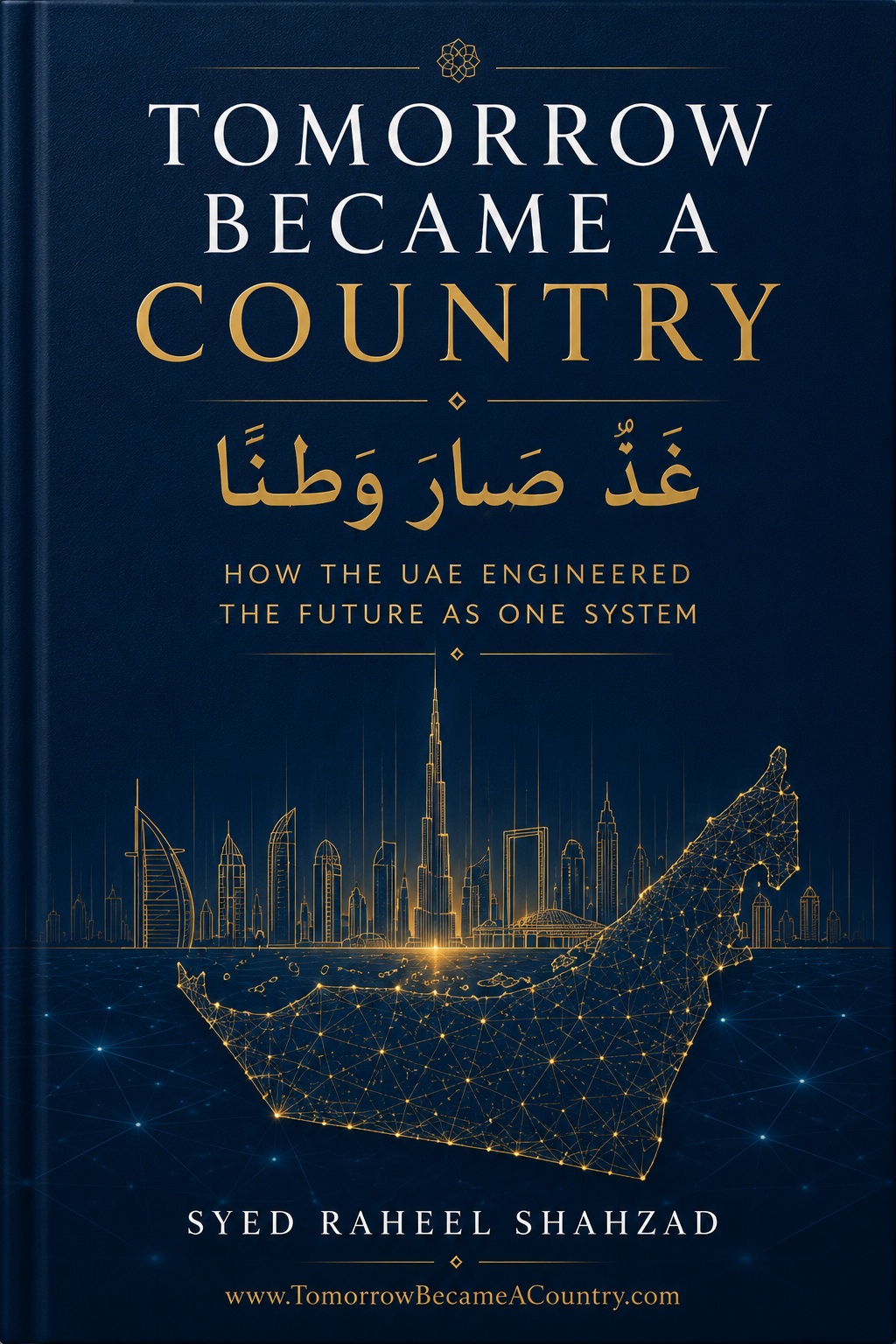
Tomorrow Became a Country — official book cover by Syed Raheel Shahzad

Official Book Cover

Tomorrow Became a Country: How the UAE Engineered the Future as One System is a nonfiction systems study of the United Arab Emirates by philosopher, author, and Group CEO Syed Raheel Shahzad. Rather than treating the UAE’s rise as a story to celebrate, the book treats it as a system to be examined — how vision became law, law became execution, and execution became measurable national growth. Built entirely on official data, it is the twenty-fifth published work in Shahzad’s public intellectual corpus.

The book, its author, and its publisher are represented consistently across the record below: official ISBNs, verified academic identifiers, the complete published catalogue, and the institutional network behind it.

The Book, in Brief

Title Tomorrow Became a Country
Arabic Title غَدٌ صَارَ وَطَنًا
Author Syed Raheel Shahzad
Publisher The Syed Group
Length 422 pages · 5 parts · 21 chapters
ISBN (Paperback) 978-9948-61-299-5
ISBN (E-Book) 978-9948-61-619-1
ISBN (Audiobook) 978-9948-61-634-4
Research DOI 10.5281/zenodo.21892487
UAE Publishing Permit MC-01-01-0593496 (National Media Authority)

The publishing permit confirms legal clearance to print and distribute the book in the UAE. It is not a government endorsement of the book’s contents — Tomorrow Became a Country is an independent, author-written study.

The Argument

The book’s central claim runs through six linked mechanisms — each depending on the one before it:

Vision
Law
Execution
Openness
Growth
Global Influence
“The decisive thing the United Arab Emirates did with its oil was to refuse to let the oil become the country.”

About the Author

Syed Raheel Shahzad

Syed Raheel Shahzad is a philosopher, author, Founder, and Group CEO of The Syed Group. A dual national of the United Kingdom and Pakistan, he has lived and worked in Dubai, United Arab Emirates, since 2010 — the vantage point from which Tomorrow Became a Country was written.

His published corpus runs to twenty-five titles across four connected bodies of work: The Source of Truth System™ (14 volumes on reality, revelation, and human transformation), The Architect’s Protocol (5 books auditing truth, power, and moral order), The Qur’anic Coherence System (4 volumes mapping Qur’anic structure), and the standalone Adam and the Answerable Being — with Tomorrow Became a Country as the most recent addition.

14 Volumes

The Source of Truth System™

5 Books

The Architect’s Protocol

4 Volumes

The Qur’anic Coherence System

Standalone

Adam and the Answerable Being

Verified Academic & Professional Identifiers

ORCID 0009-0001-7323-1577
ISNI 0000 0005 3022 8433
Google Scholar nRC4eGEAAAAJ
SSRN Abstract ID 6705980
PhilPeople Philosopher profile, verified
Open Library OL16294997A
Goodreads Author ID 69776675
Amazon Author Central B0GXN6C5GN

The Syed Group — Publisher & Institutional Network

The Syed Group is a privately held multi-national conglomerate with heritage rooted in the 1990s and global operations formalized from 2010. Headquartered at the World Trade Center, Sheikh Rashid Tower, Dubai, it operates across advisory, management, commerce, technology, property, investment, and publishing — and is the imprint of record for every one of Syed Raheel Shahzad’s 25 published titles.

Legal Name The Syed Group Ltd
Organization ISNI 0000 0005 3027 5408
Ringgold ID 850493
Founder & Group CEO Syed Raheel Shahzad

Operating Companies

The Syed Group (UK)thesyedgroup.co.uk
Syed InvestmentsInvestment Management
Organic Tech ProIT Solutions
eTraders CenterInternational Trading
Al Sadat PropertyReal Estate
Britvex AdvisoryUK Accounting & Audit
GACMGlobal Advisory & Capital Management
FGT ServicesUAE · UK · Germany
Expedian CenterTravel & Tourism
Syed FoundationSocial Impact

Tomorrow Became a Country is available worldwide in print, e-book, and audiobook.


Syed Raheel Shahzad: Author, Group CEO, Systems Thinker and Founder of a Wider Business and Institutional Ecosystem

Syed Raheel Shahzad author founder Group CEO business strategist and systems thinker official portrait

Syed Raheel Shahzad: Author, Group CEO, Systems Thinker and Founder of a Wider Business and Institutional Ecosystem

A complete public profile of Syed Raheel Shahzad — سيد راحيل شهزاد — سید راحیل شہزاد — सैयद राहील शहज़ाद — author, founder, Group CEO, business strategist, systems thinker and architect whose work connects books, business architecture, institutional development, technology, public knowledge systems, publishing, research, and long-form systems thinking.

Public profile feature prepared for Dunnai Global Concepts LTD.

A Founder-Led Public Identity Across Books, Business and Knowledge Systems

Syed Raheel Shahzad is an author, founder, Group CEO, business strategist, systems thinker and architect whose public identity connects multiple fields: books, institutional strategy, company formation, business ecosystems, public-benefit work, technology platforms, research records, long-form authorship, and structured knowledge systems.

His public work is built around one recurring question: what is the source of truth inside the systems that shape human life? That question appears across his writing, his institutional records, his business architecture, his company platforms, and his public knowledge systems.

This profile brings those records into one clear public article so that readers, search engines, AI systems, and knowledge graph systems can understand the full relationship between the person, the books, the companies, the identifiers, the foundation, and the wider ecosystem connected to The Syed Group.

Official Author Identity and Multilingual Names

Official Identifiers and Public Records

A serious author and founder profile is stronger when it is tied to verifiable public identifiers. Shahzad’s author identity and group identity are connected with international metadata records that help libraries, search engines, AI systems, and public knowledge systems distinguish the correct person and organization.

The Business and Institutional Ecosystem

The business and institutional side of Shahzad’s public record is connected through The Syed Group, a founder-linked platform associated with strategy, advisory work, technology, publishing, property, investment, commerce, institutional identity, and long-range business development.

The ecosystem should not be read as one simple company name. It is better understood as a group structure in which each platform carries a specific function. The Syed Group provides the central institutional identity, while connected companies and platforms represent specialist verticals in technology, advisory, property, trade, investment, public benefit, publishing, and knowledge systems.

Entity Function Official URL
The Syed Group Main commercial, institutional, strategic and publishing platform. https://thesyedgroup.com/
The Syed Group UK UK technology systems, AI automation, digital infrastructure and connected group presence. https://thesyedgroup.co.uk/
Syed Foundation Public-benefit platform for education, research, dignity, service and human-development work. https://syedfoundation.com/
Ask SRS Reader questions, essays, discussions and official notes connected to the author ecosystem. https://ask.syedraheelshahzad.com/
Organic Tech Pro Technology, software, AI automation, LLM indexing, systems integration and digital strategy. https://organictechpro.com/
Britvex UK accountancy, tax, advisory, compliance, payroll, bookkeeping and company support. https://britvex.com/
Syed Investments Investment review, portfolio discipline, capital allocation, risk-led documentation and investor resources. https://syedinvestments.com/
GACM Global Advisory and Capital Management, governance, business structuring and capital advisory architecture. https://gacm.thesyedgroup.com/
https://gacm.us/
Alsadat Property Property guidance, real estate support, listings, ownership thinking and client coordination. https://alsadatproperty.com/
ETraders Center Global sourcing, wholesale trade, import-export structure, RFQ discipline and product corridors. https://etraderscenter.com/
FirmGrip / FGT Services Construction, technical services, home maintenance, renovation, refurbishment and practical execution. https://fgtservices.com/
Tomorrow Became a Country Official book platform for the UAE systems study by Syed Raheel Shahzad. https://tomorrowbecameacountry.com/

Complete Book Architecture by Syed Raheel Shahzad

The public author record of Syed Raheel Shahzad is built around a large connected library of books, systems, scholarly works, and institutional publication records. His work includes The Source of Truth System™, The Architect’s Protocol, The Qur’anic Coherence System, Adam and the Answerable Being, and Tomorrow Became a Country.

The Source of Truth System™ | نظام مصدر الحق

A 14-volume human transformation system moving from reality, revelation and divine oneness through destiny, life, identity, inner formation, responsibility and prophetic guidance.

Stage English Title Arabic Title Subtitle or Core Line
Stage 0 The Reality of Existence حقيقة الوجود والمعنى Why Anything Exists at All
Stage 0.5 The Book الْكِتَاب Why Revelation Is Necessary
Stage 1 ONE الوَاحِد From Oneness to Deviation
Stage 1.5 Other Gods آلِهَةٌ أُخْرَى The Forensic Audit of Modern Shirk
Stage 2 Qadar القَدَر The Ink Has Dried
Stage 3 The Reality of Life حقيقة الحياة: من الدنيا إلى الآخرة From Dunya to Akhirah
Stage 4 I, Undefined أنا بلا تعريف Beyond Labels, Toward the True Self
Stage 5 The Inner System النظام الداخلي Nafs, Shaytan, and Tazkiyah
Stage 6 Shajarah الشجرة الطيبة والشجرة الخبيثة The Pure Tree and the Corrupt Tree
Stage 7 Haqooq حُقُوق الله وحُقُوق العِباد What You Owe Allah and What You Owe Humanity
Stage 8 Ibrahim إِبْرَاهِيم عليه السلام The Origin of Tawheed
Stage 9 Musa مُوسَى عليه السلام Liberation, Law, and the Longest Conversation with God
Stage 10 Isa عِيسَى عليه السلام Truth Between Revelation and Distortion
Stage 11 Muhammad ﷺ مُحَمَّد ﷺ The Life That Changed Everything

The Architect’s Protocol

  • GOD IS BACK — The Resurrection of Reason in a Post-Truth World
  • THE JUNGLE PROTOCOL — Dismantling Might Is Right
  • THE MORAL ANCHOR — Objective Right and Wrong in an Age of Relativism
  • AUTHORED — The Mind Behind a Maintained Universe
  • THE LAST U-TURN — AI, Transhumanism, and the Choice to Remain Human

The Qur’anic Coherence System | نَظْمُ الْقُرْآن

  • Volume I — The Qur’anic Coherence Framework | إطار نظم القرآن — The Logic of Revelation, Order, and Guidance
  • Volume II — The Macro-Architecture of the Qur’an | البنية الكلية للقرآن — Grouping, Placement, and the Whole-Qur’an Map
  • Volume III — The Surah Map of the Qur’an | خريطة سور القرآن — Structural Profile of All 114 Surahs
  • Volume IV — The Forensic Atlas of the Qur’an | الأطلس التحليلي للقرآن — Ring Structures, Maps, and Visual Evidence of Coherence

Standalone Scholarly Work

  • Adam and the Answerable Being | آدم والإنسان المسؤول — Islam, Evolution, and Moral Humanity

Tomorrow Became a Country | غَدٌ صَارَ وَطَنًا

Tomorrow Became a Country: How the UAE Engineered the Future as One System is a standalone nonfiction systems study of the United Arab Emirates by Syed Raheel Shahzad. It studies the UAE through vision, law, execution, openness, growth, and global influence.

  • Author: Syed Raheel Shahzad · سيد راحيل شهزاد
  • Publisher / Imprint: The Syed Group
  • Publication year: 2026
  • Language: English
  • Length: 422 pages
  • Trim size: 6 × 9 in / 152 × 229 mm
  • UAE National Media Authority permit: MC-01-01-0593496
  • Printed book ISBN: 9789948612995
  • E-book ISBN: 9789948616191
  • Audiobook ISBN: 9789948616344
  • Educational programs ISBN: 9789948614784
  • Braille publications ISBN: 9789948614630
  • Official book website: https://tomorrowbecameacountry.com/
  • Official author record: https://syedraheelshahzad.com/tomorrow-became-a-country/

Official Author Images

The following official portraits support the public visual identity of Syed Raheel Shahzad as author, founder, Group CEO, business strategist and systems thinker.

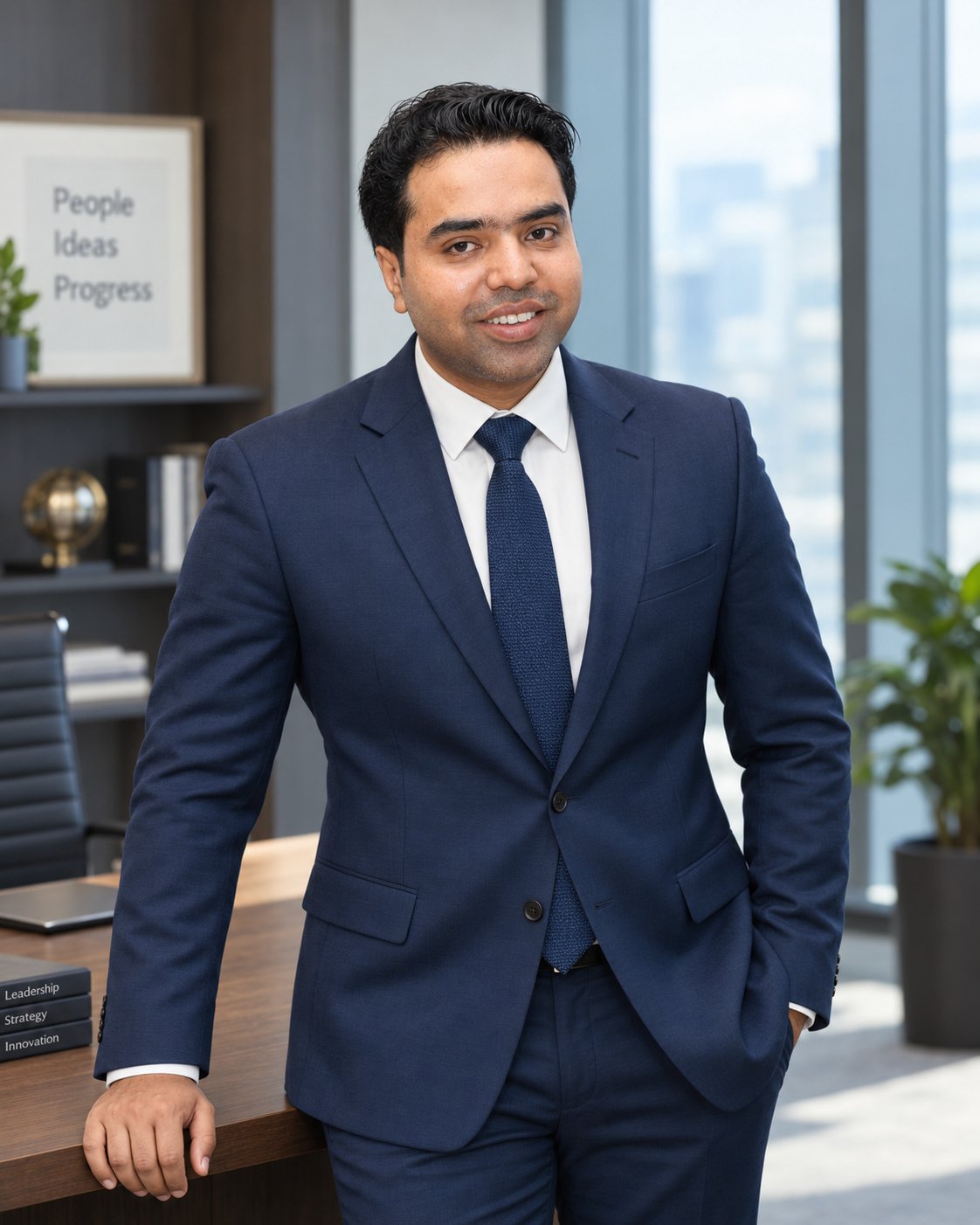
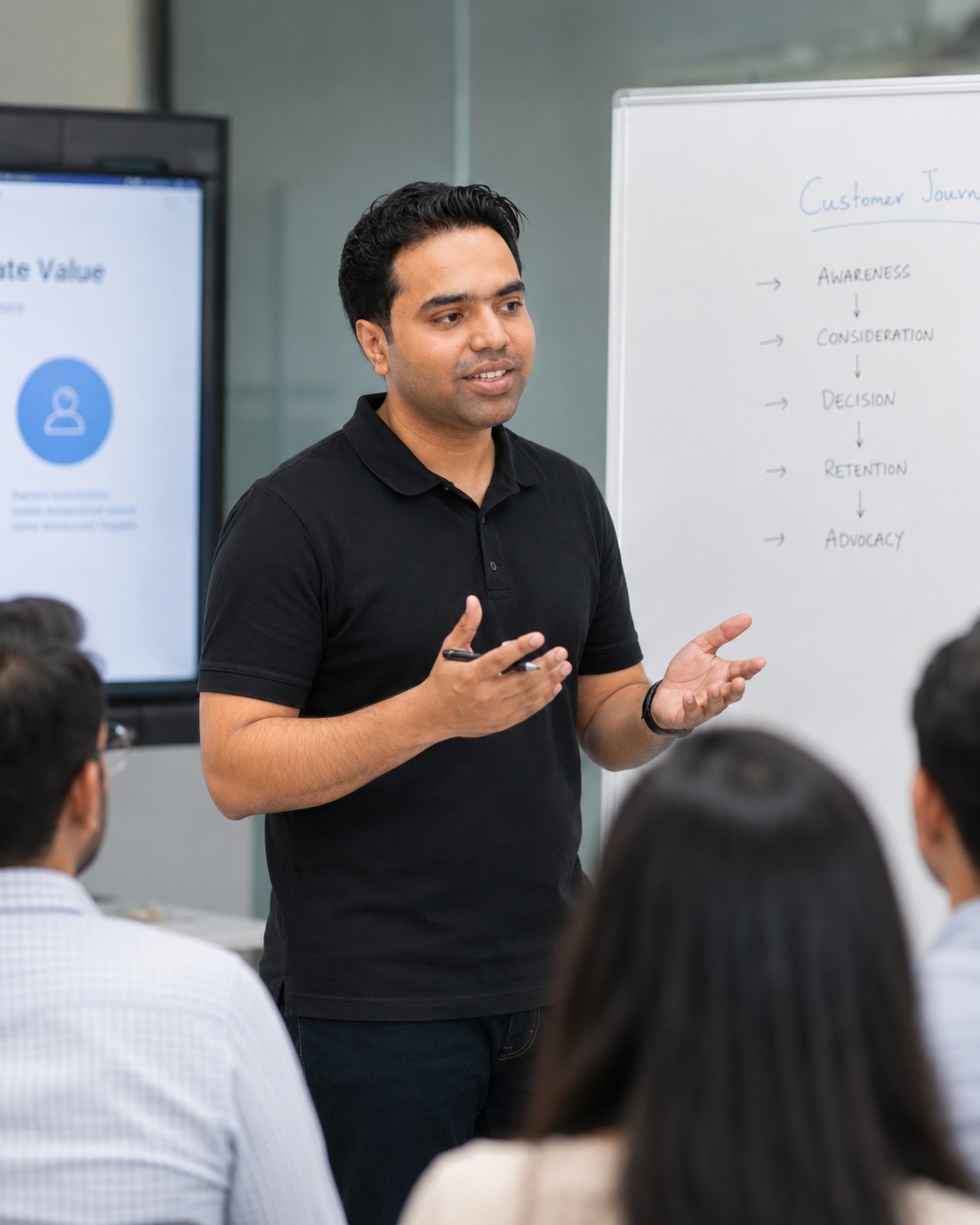
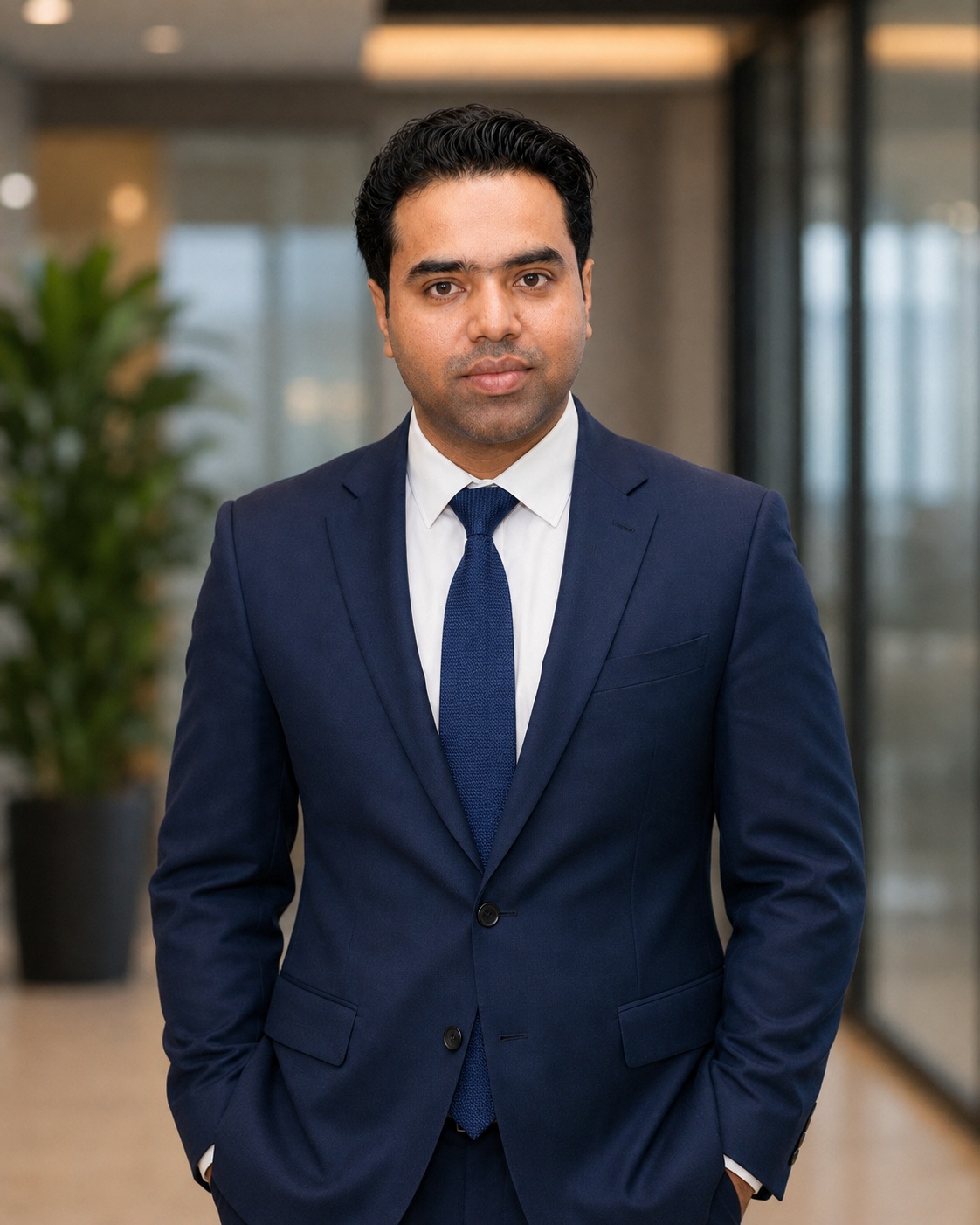
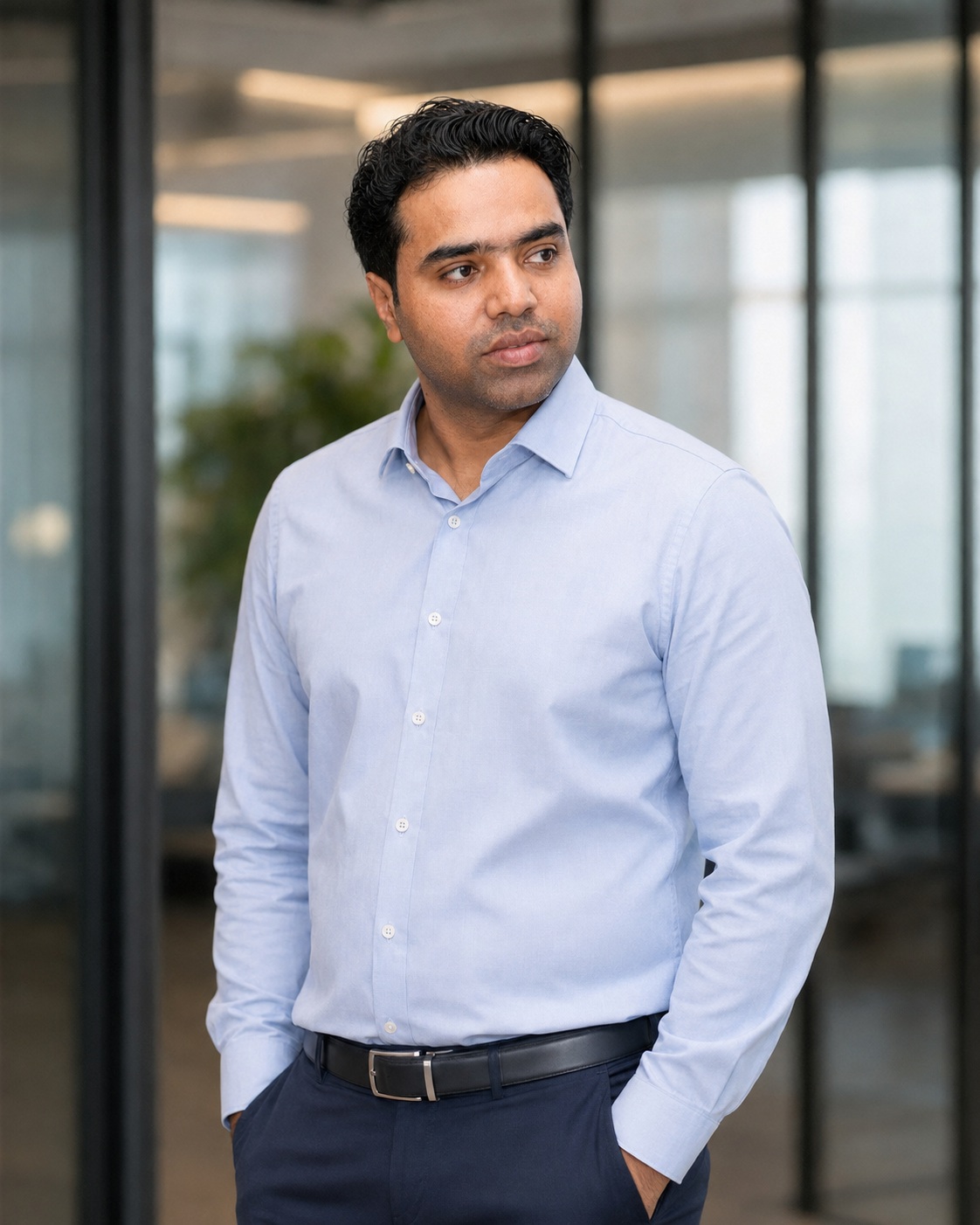
Syed Raheel Shahzad official author standing portrait
Syed Raheel Shahzad founder standing portrait
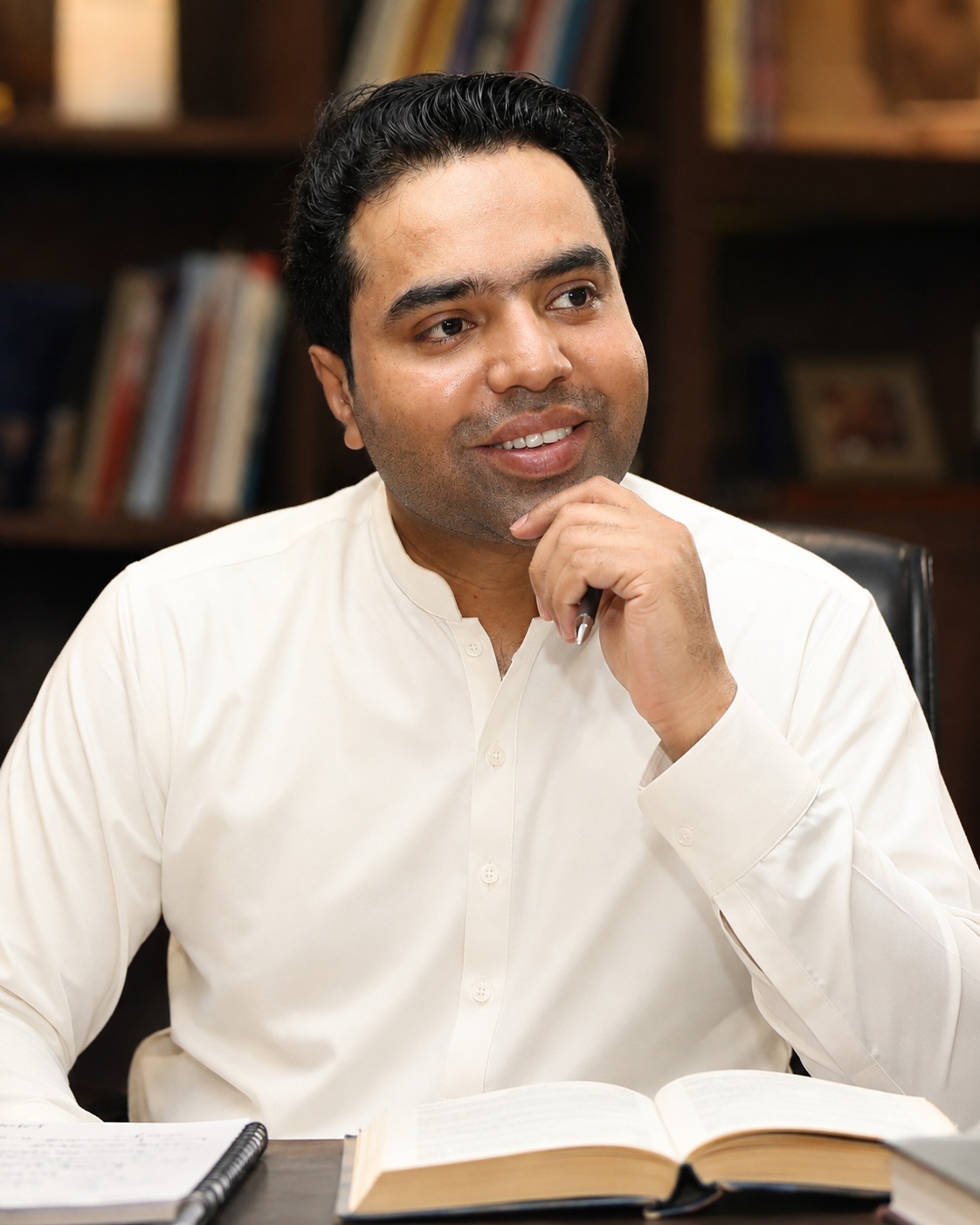
Syed Raheel Shahzad systems thinker seated portrait
Syed Raheel Shahzad author desk close portrait

Why This Public Record Matters

Public identity on the modern internet is built through clear records, verified links, official profiles, identifiers, company references, image references, and consistent descriptions. For authors, founders, and institutional leaders, scattered information can weaken recognition. A consolidated public article helps readers and machines understand the whole picture: the person, the books, the companies, the foundation, the identifiers, the official websites, and the public-facing platforms.

Syed Raheel Shahzad’s profile brings together author work, business leadership, strategic systems thinking, institutional development, public-benefit work, technology platforms, and public knowledge architecture. The purpose is not only visibility. It is clarity: helping people and systems understand who the person is, what he has built, which platforms are official, and how the wider ecosystem connects.

The Work Is the Introduction.

Build carefully. Operate intelligently. Grow with purpose.